Shahriyor Sharifjonov

Work

Three places, three different seats at the table, and a product I built for my own team. For each: what I owned, what changed, and the screens.

The digital channel of an insurer

Digital Product Manager, Gross Insurance JSC. Tashkent, on site. April 2026 to now.

What I own

Gross Insurance sells its policies through agents, through partners, and through channels I own outright: the website, the mobile app (iOS and Android) and the Telegram Mini App. They are where a customer buys a policy and comes back to renew it or to make a claim.

My job is their direction: what they should do next, in what order, and how to tell whether it worked. A roadmap that sales, IT and management agree on, analytics that measure the funnel rather than the traffic, and releases that move a number.

What changed in seven months

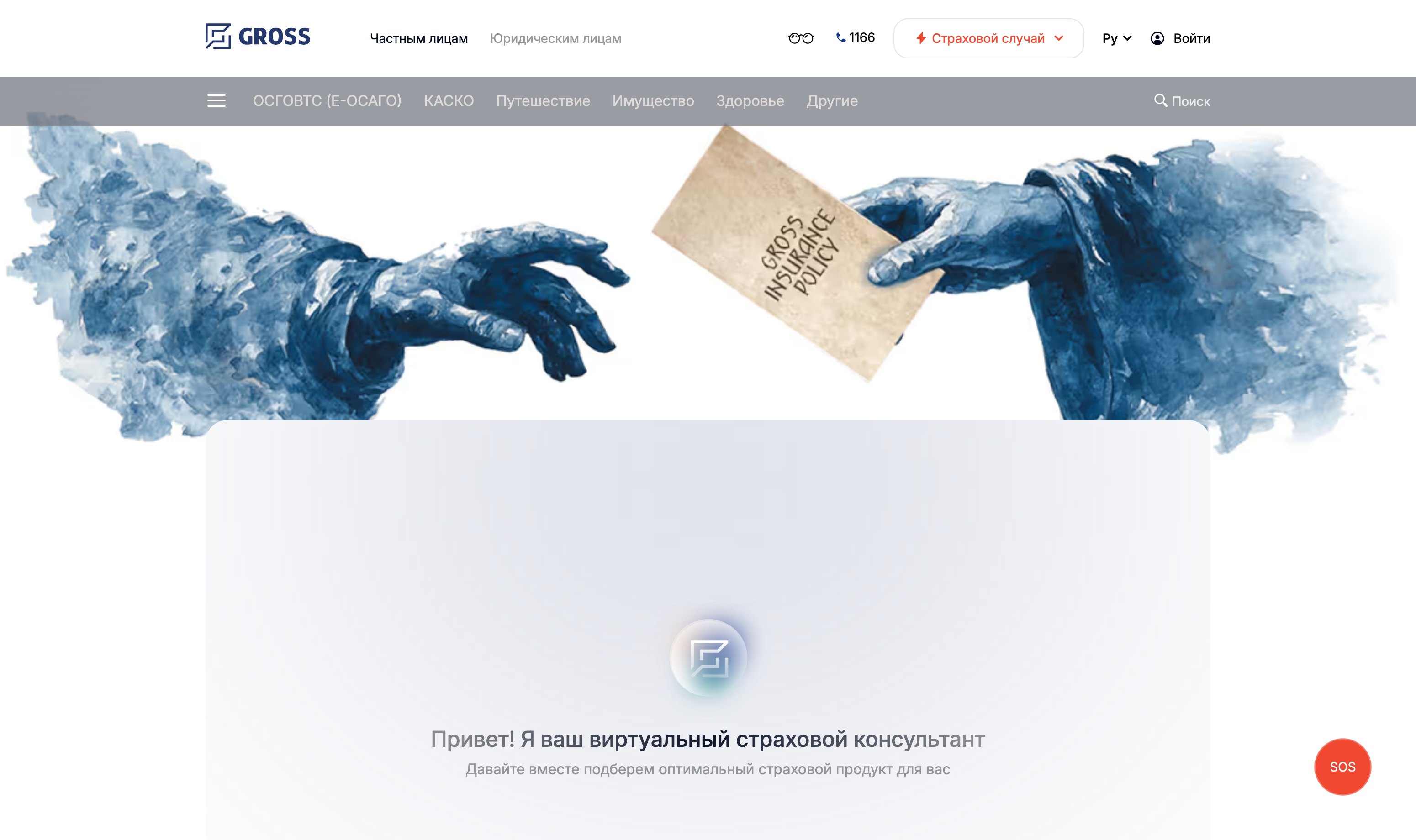
The home page used to open with an illustration and a chat consultant; now it opens with the plate-number field and a policy in two minutes, and carries the −15% campaign on voluntary policies that runs to the end of December.

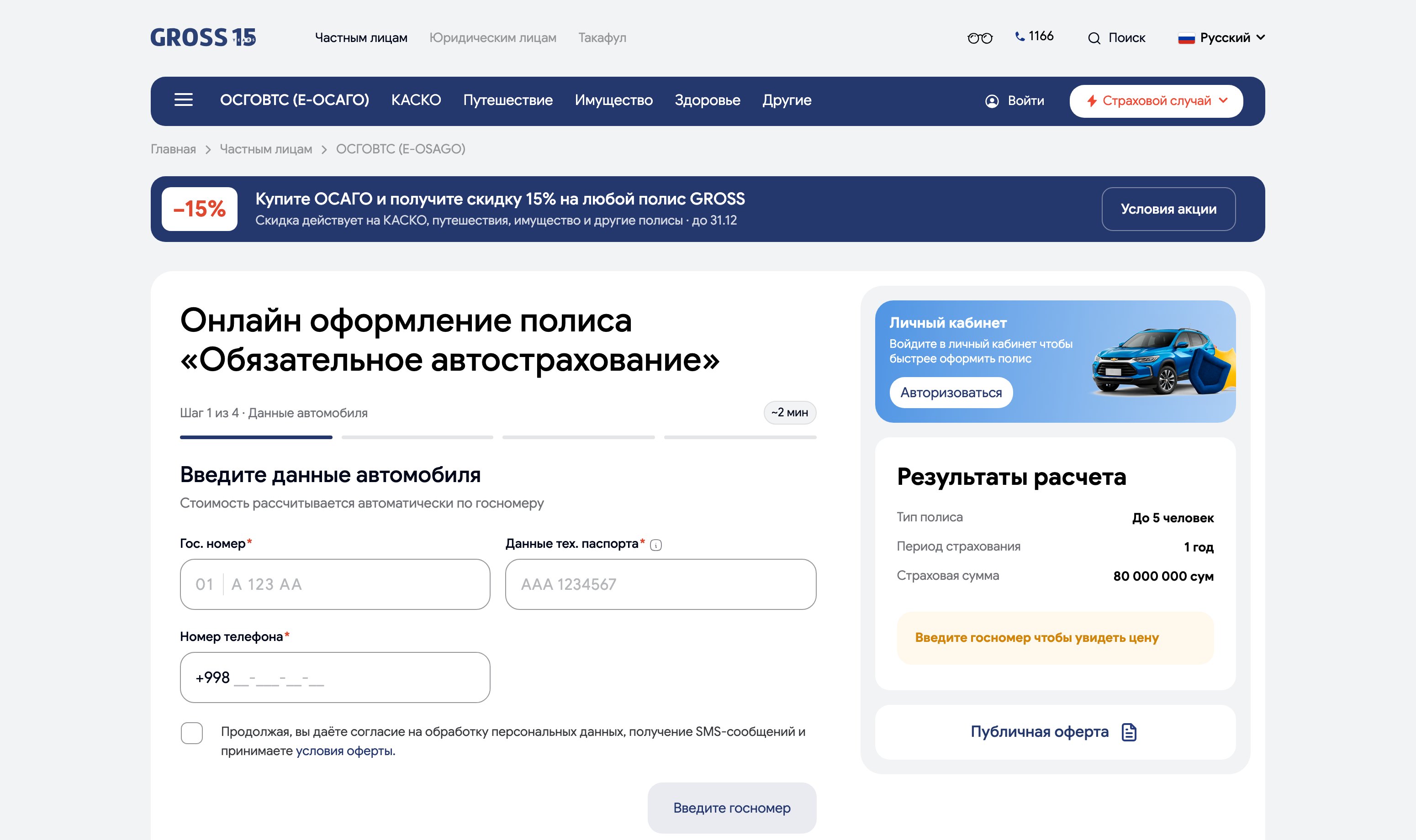
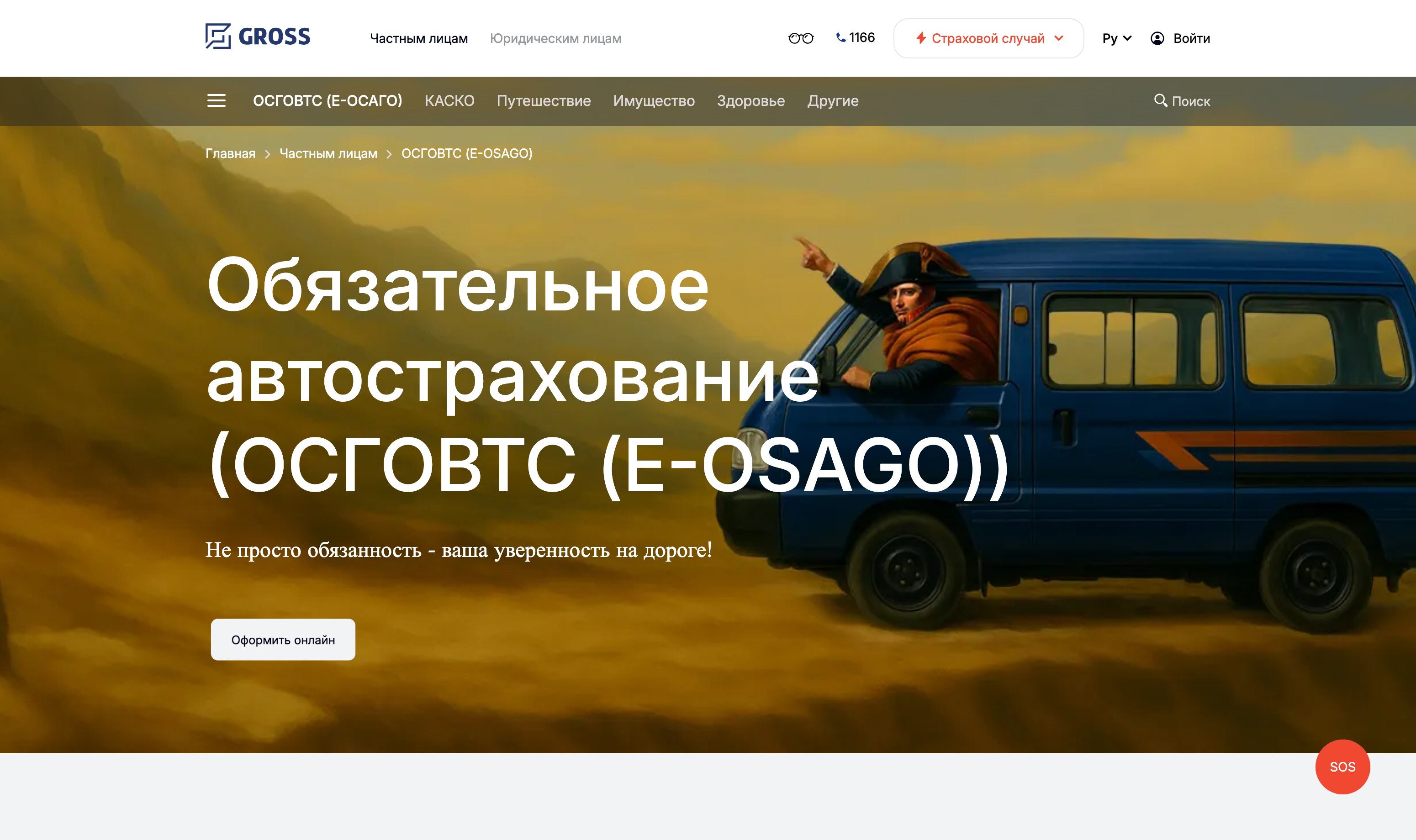
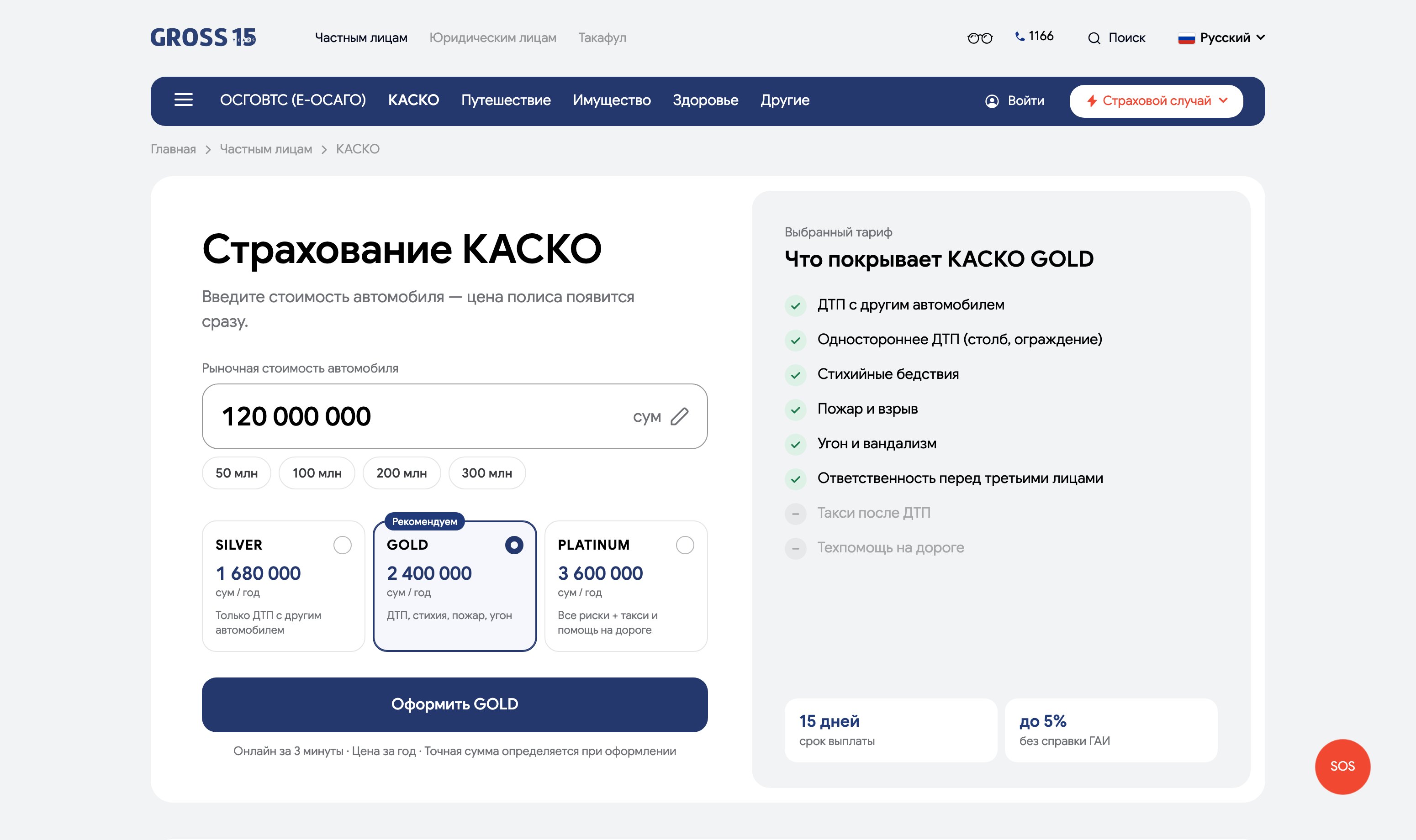
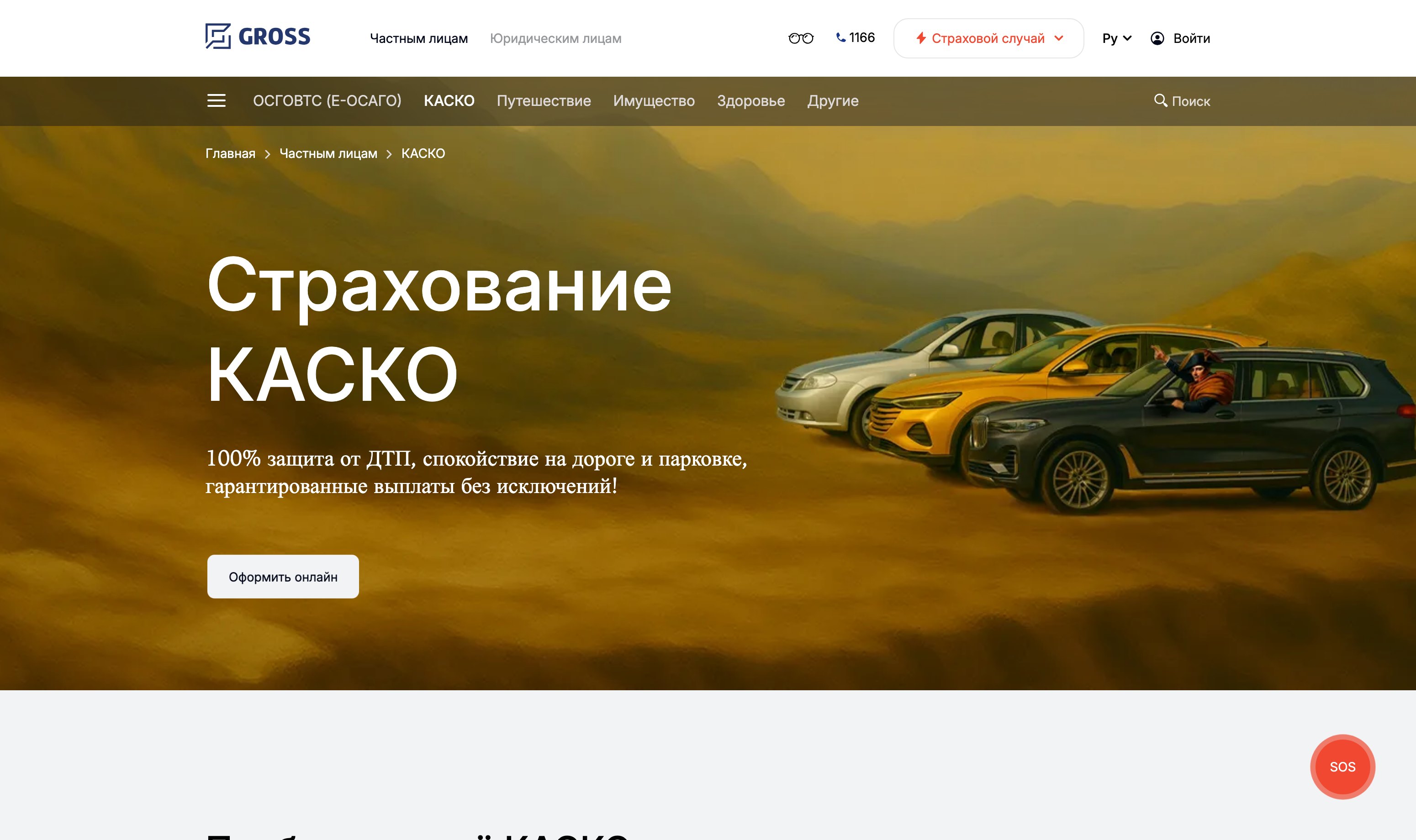
The OSAGO page used to be a hero with a van and a button; now it is the order form itself, four steps, the price before any personal data. KASKO got a calculator with three tariffs and a price before anyone has to call.

The home page
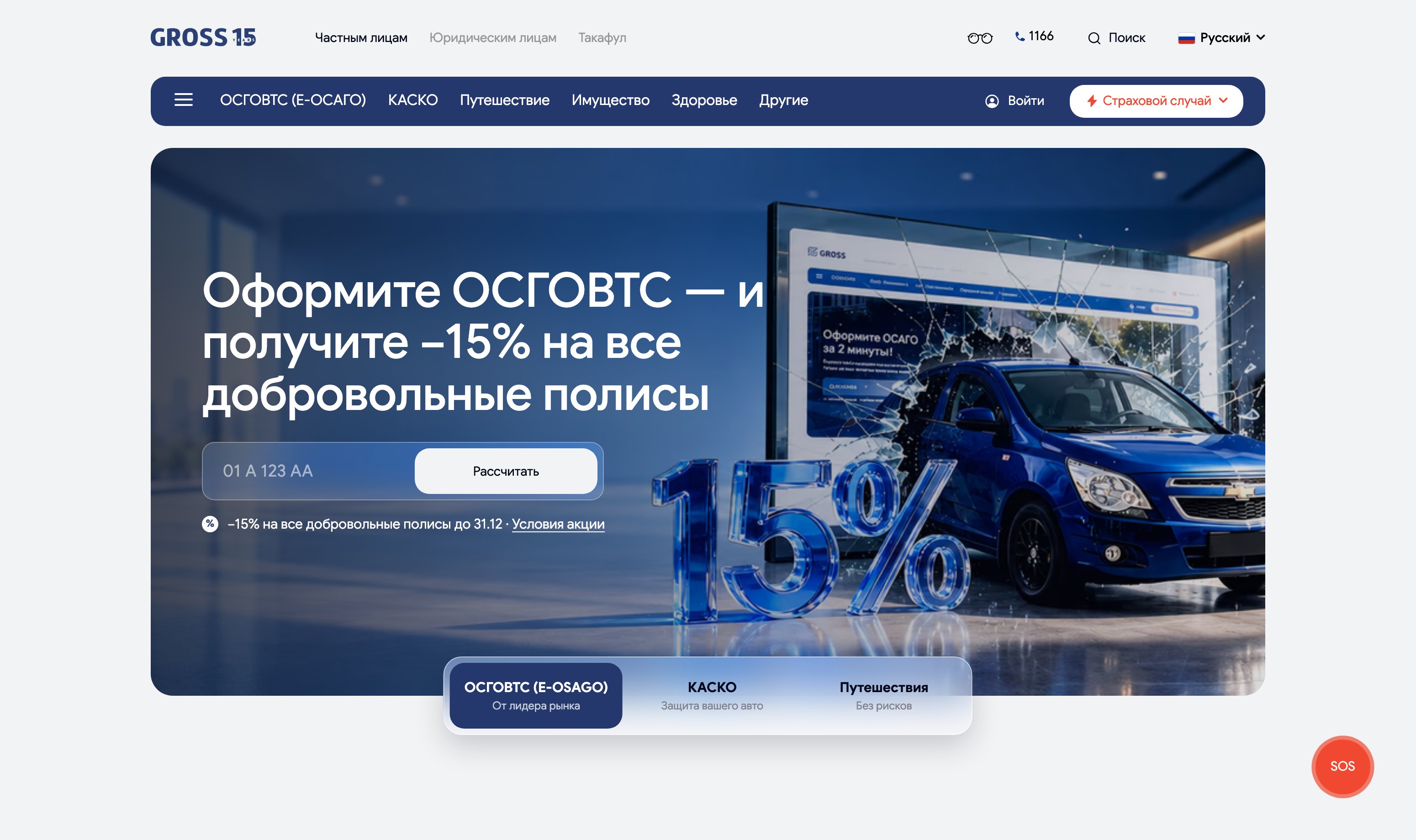
gross.uz home page in November 2026: enter your plate number, −15% on voluntary policies
gross.uz home page in June 2026, before the redesign: a watercolour illustration of two hands and a chat consultant
Before the redesign, June 2026Drag to compareNow, November 2026

The OSAGO page

The OSAGO page in November 2026: a four-step order form with the price computed from the plate number
The OSAGO page in June 2026, before the redesign: a painted hero with a blue van and one button
Before the redesign, June 2026Drag to compareNow, November 2026

The KASKO page

The KASKO page in November 2026: enter the car's value and three tariffs appear with a yearly price
The KASKO page in June 2026, before the redesign: a painted hero with three cars and one button
Before the redesign, June 2026Drag to compareNow, November 2026

Month by month: each step as the problem, what I did and the result

The longer story on the blog: what changed on gross.uz, and why
A studio of ten, 40+ projects

Co-founder and Project Manager, Keypix. Tashkent, on site. September 2024 to May 2025.

What I owned

Keypix was founded in 2024 as a digital product and web development studio, and I built it from the ground up: the team of ten across design, development and the business side, and the way it worked. It delivered more than 40 websites, web applications and Telegram bots for businesses.

I worked directly with clients from the first discovery call through requirements, delivery and ongoing support, and I made the calls that balance what the client needs, what the product should be, when it ships and what it costs the studio.

I hired ten people before revenue could carry them and did not plan the cash flow, so in May 2025, after eight months, I closed the studio. I build products better than I run the finances of a small business, so I joined a US logistics software company as a full-stack developer; three months later I was its product manager.

What running it meant

  • Sold the work: sales, negotiations, business development
  • Hired the ten and ran the day-to-day
  • Held the budget and allocated people across concurrent projects
  • Set the technical direction and reviewed what shipped
  • Kept the clients, from the first call to ongoing support
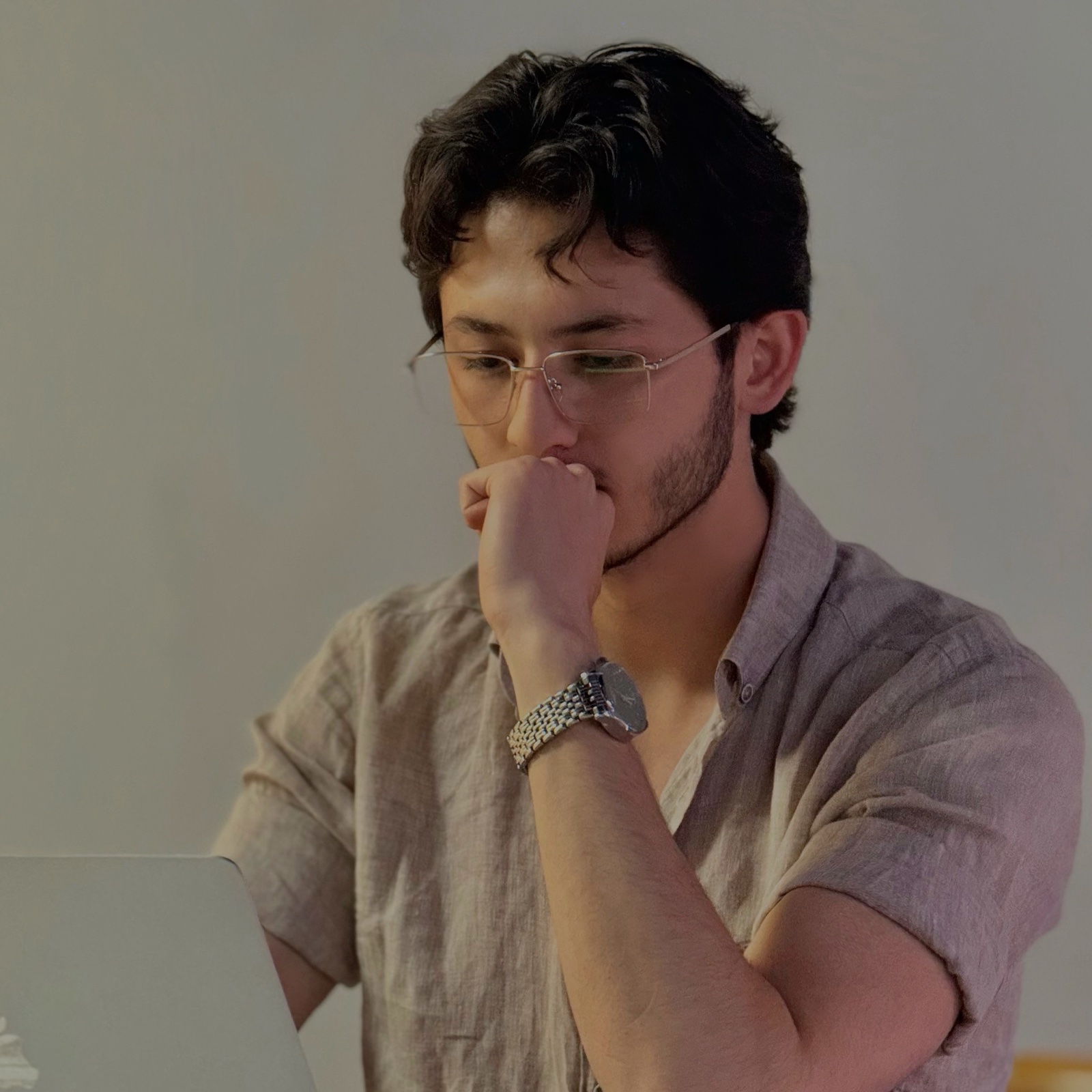
Shahriyor Sharifjonov at a laptop, chin on his fist, reading

The longer story on the blog: what a ten-person studio taught me

A grocery delivery service, from zero

Head of Operations and Startup Launch, Bozor Boy. Tashkent, on site. April 2023 to August 2024.

What I owned

Bozor is the Uzbek word for the bazaar, and Bozor Boy set out to bring its groceries to the door. I built and launched the service from the ground up, taking ownership of business operations, partnerships, marketing and the digital product itself.

What it taught me

It was the first time I owned every side at once: the operation that fulfils an order, the partners who supply it, the marketing that brings the first customers, and the product they order through. Seventeen months later I left to start a studio.

The longer story on the blog: launching a grocery delivery service from zero

northly, a tracker I built

My own product, built in the autumn of 2026 and used by the Gross digital team. northly.uz

Why I built it

The team had Jira, but it never took: the developers did not open it, so there was no single order of work. I needed a tracker people would actually open, and one that ties the work to the numbers it is meant to move.

The team uses it and likes it. Management has access too, so they see what we are working on without asking.

What it does

  • A board, a roadmap and releases; when a release ships, Telegram gets a message with its tasks
  • Prioritisation by RICE, with a filter for tasks that have no score yet
  • Points from the time estimate, a penalty for late delivery that a manager can waive, and a weekly team feed
  • Metrics from Yandex Metrica, funnels and dashboards; releases and tasks linked to the metric they should move and to OKR key results
  • Tasks from Telegram: a message to the bot becomes a task
  • An MCP server, so an AI assistant can read and update tasks as a member of the team

Next.js, Supabase, Tailwind and shadcn/ui, on Vercel.