What changed on gross.uz in seven months, and why
In April 2026 I took over the digital channels of an insurer. Four product decisions that changed the site, with the screens before and after.
The home page
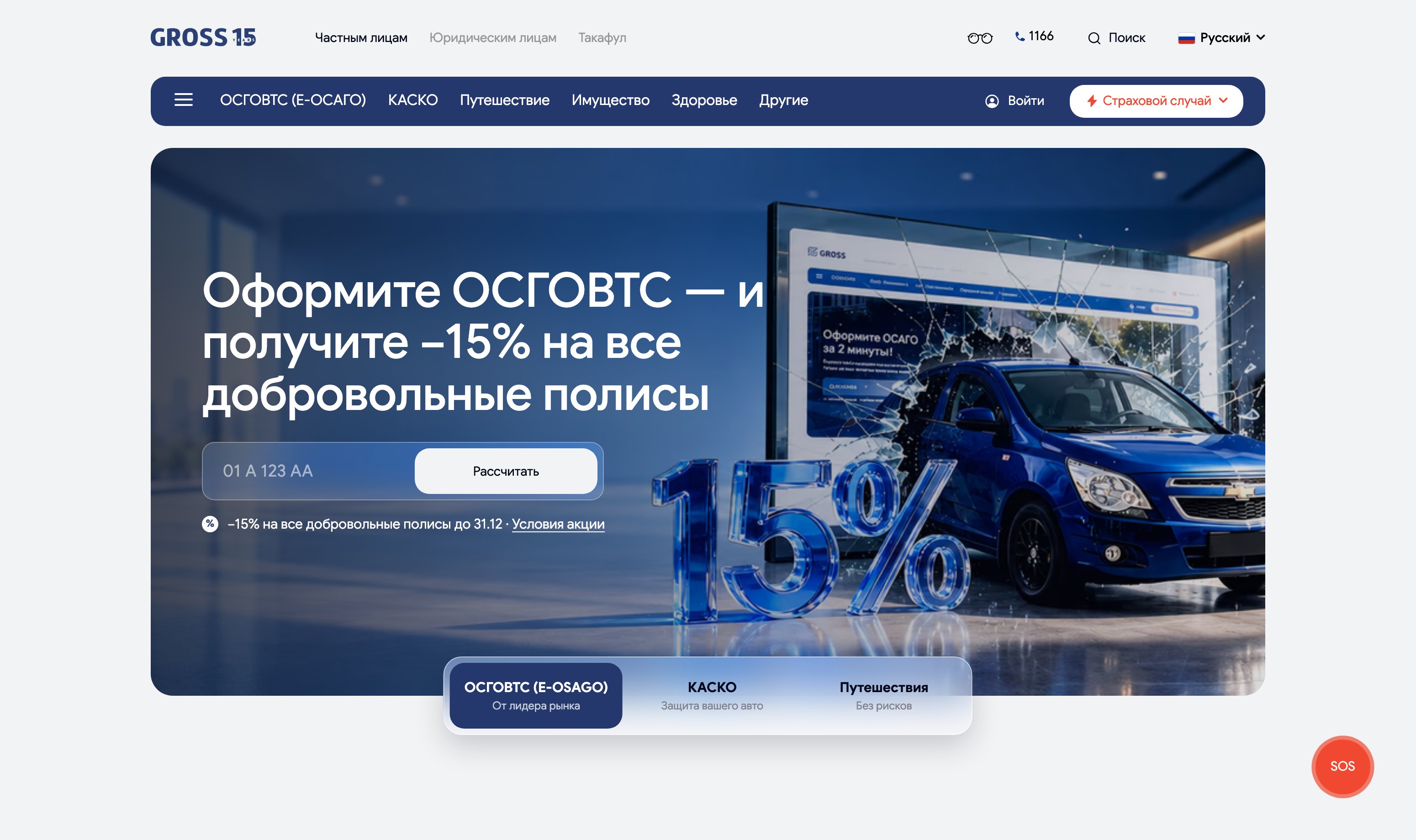
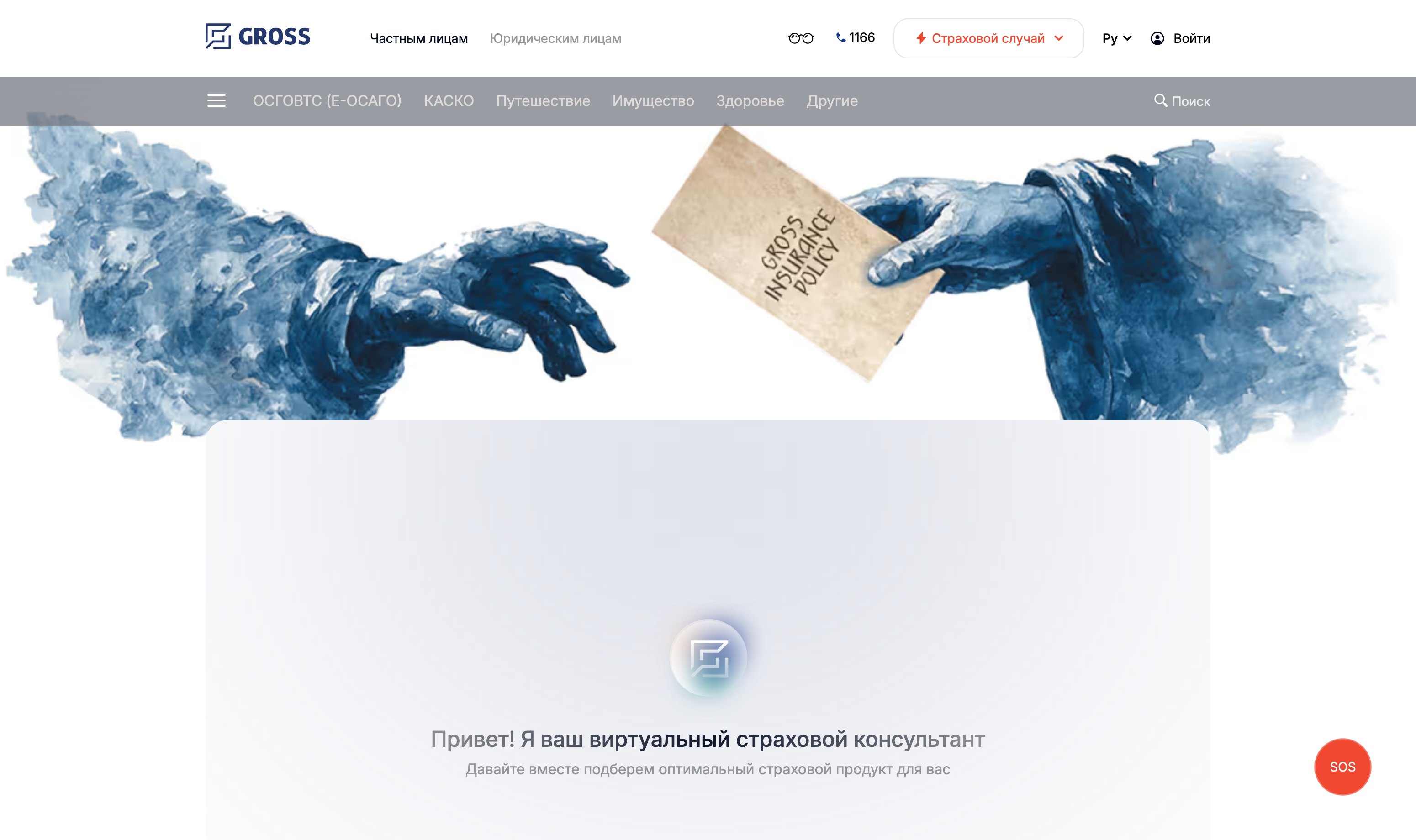
I joined Gross Insurance as Digital Product Manager in April 2026, after working as a product manager at a US logistics software company since August 2025. The company sells policies through agents, through partners and through three digital channels that are mine: the website gross.uz, the mobile app for iOS and Android, and a Telegram Mini App. This is what changed on the website in the first seven months, what each change was for, and what I would tell another product manager who inherits a channel like this.
Conversion figures and volumes belong to the company, so they stay out of this post. The one number I share is the change: weekly OSAGO sales through the site grew 64% after the June release. The screens are public, so the rest of the post sticks to them.
Where we started
In April the home page opened with a watercolour of two hands passing a policy, and a chat consultant underneath: “Hi! I'm your virtual insurance consultant.” It was memorable. It also asked a visitor to start a conversation before they had seen a single product or price.
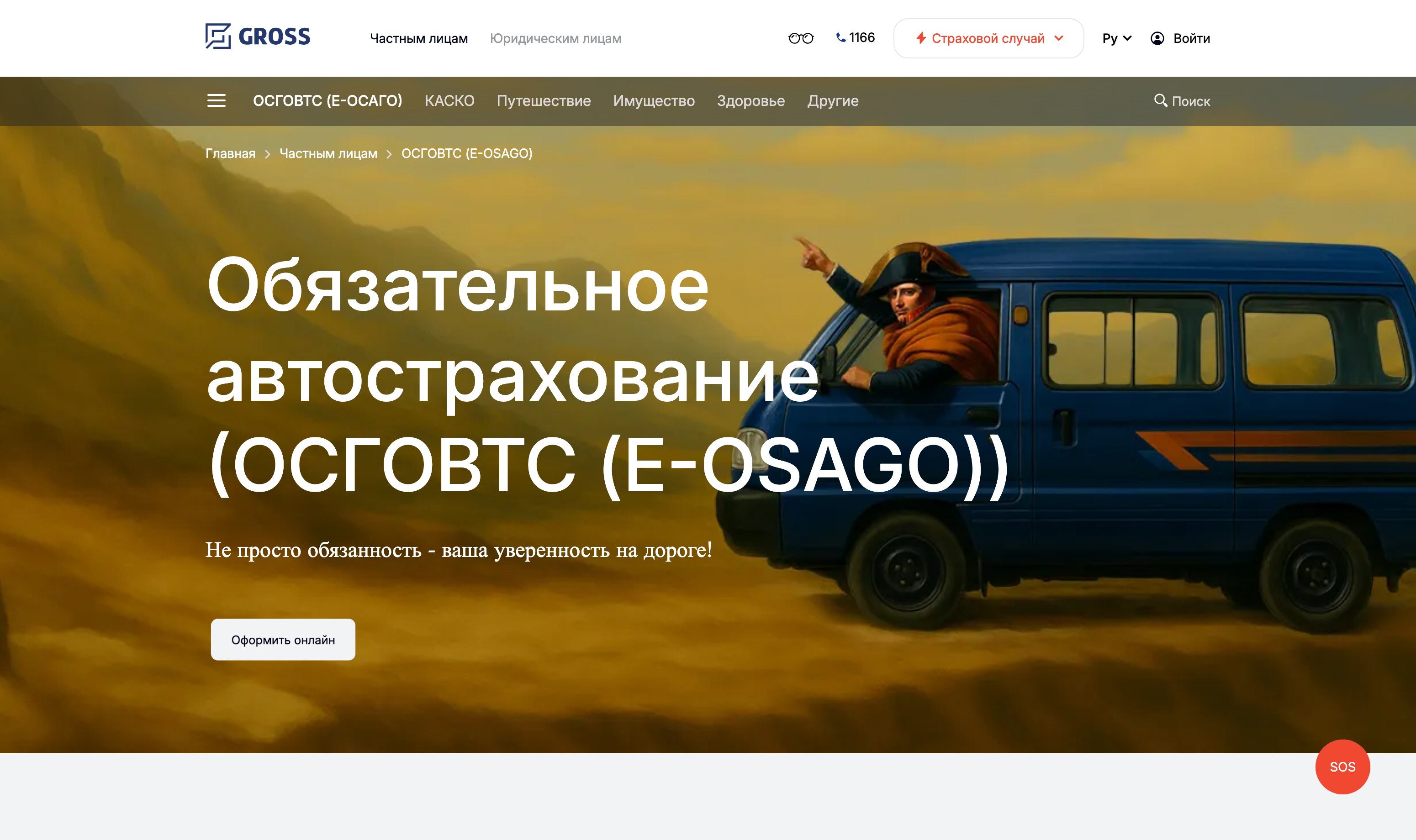
The OSAGO page, for compulsory motor insurance and the product most visitors come for, opened with a painted hero: a blue van and one button. Behind the button was a long form of dropdowns. Vehicle type, region, number of drivers, period and start date came first; the plate number and the technical passport came last.
Decision one: the first field is the action
Most people who open an insurer's site already know what they want, and on gross.uz it is usually OSAGO for their car. So the home page now opens with the field that starts that purchase, the plate number, next to a promise anyone can check: a policy in two minutes. The other products, the cabinet and the claims moved below and into the menu.
Decision two: the price before the personal data
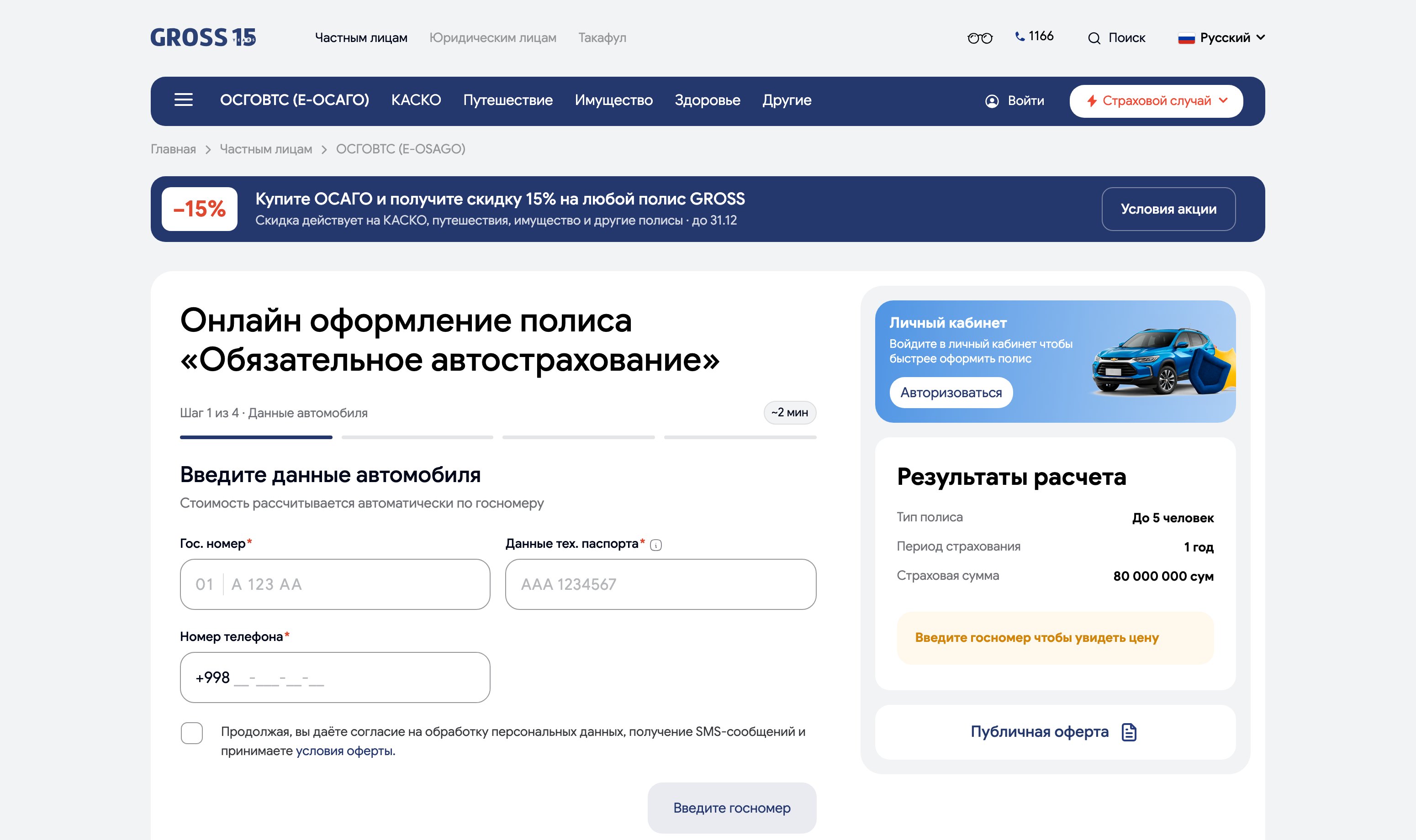
The OSAGO page is now the order form itself. Four steps, and the first one asks only about the car: the plate number and the technical passport. The price appears on the right as soon as the car is known, before anyone types a name, a passport number or a phone number. Every field a person fills in before they see a price is a reason to leave, and personal data is the heaviest of them.
The OSAGO page
Decision three: the mandatory product opens the door to the voluntary ones
People buy OSAGO because the law requires it. They buy KASKO, travel or property insurance because they decided to. The bridge between the two is the moment right after an OSAGO purchase, when the customer has just trusted the company with their car. Until 31 December a customer who buys OSAGO gets 15% off any voluntary policy, and the offer sits on the home page and on the OSAGO page, where that decision is made.
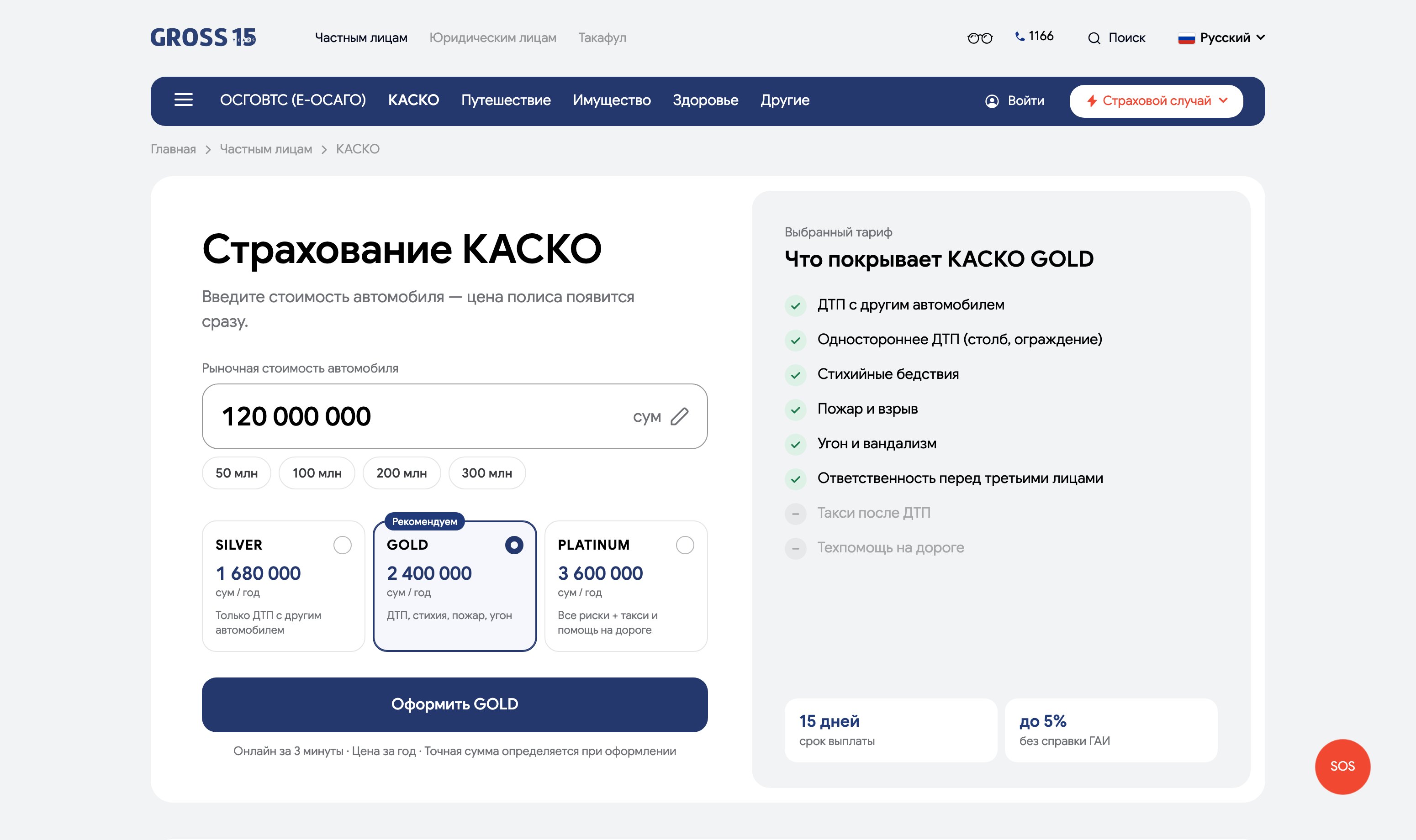
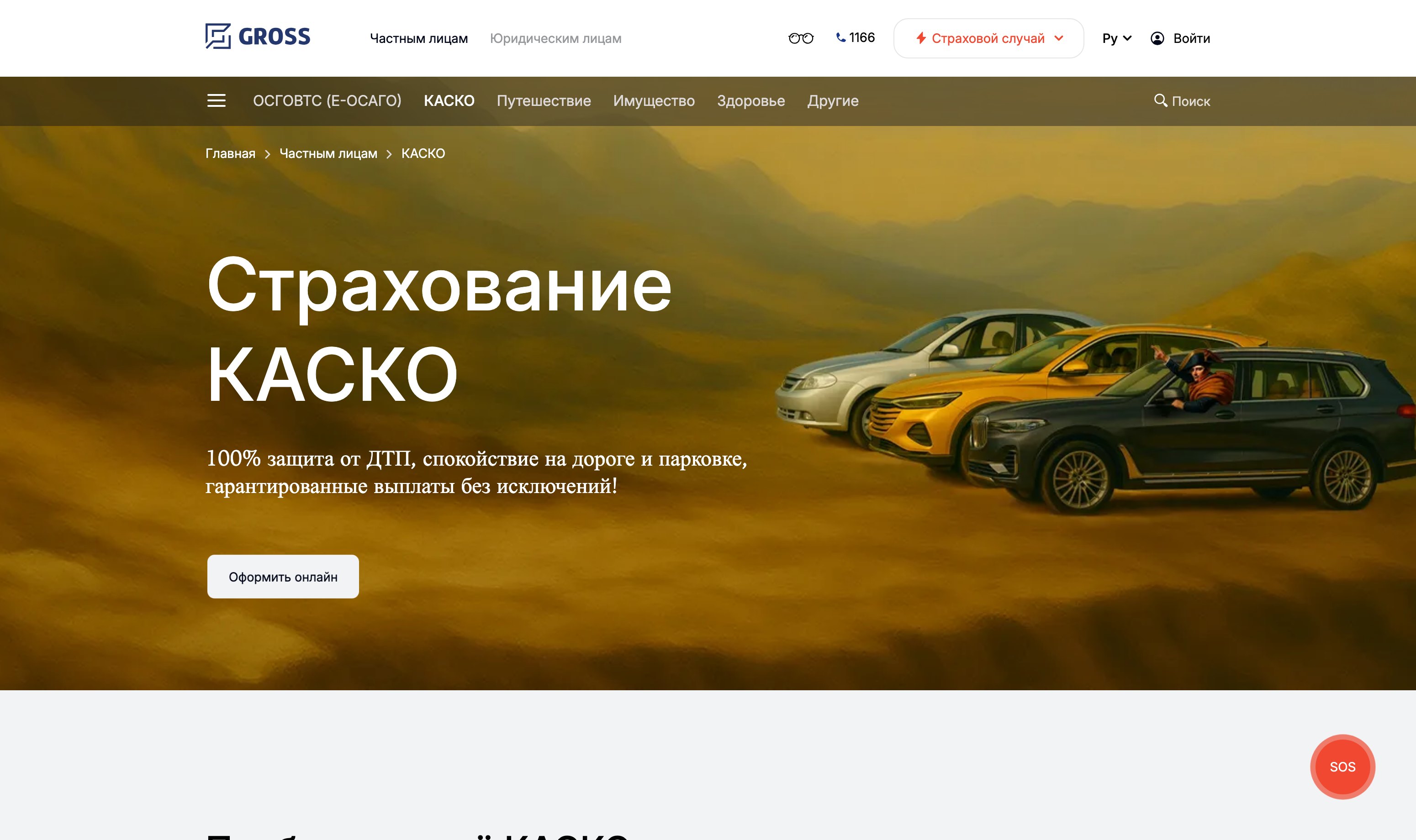
KASKO got its own calculator for the same reason. Type the car's value and three tariffs appear with a yearly price: Silver, Gold and Platinum. Nobody has to call a manager to find out what it costs.
The KASKO page
Decision four: the cabinet replaces a visit to the office
Customers sign in to the cabinet with MyID, the national digital identity, so there is no password to forget. Inside they can book a doctor under their health policy, see what is left of their limits, and cancel a policy online with the refund paid to their card. Each of these is a phone call or an office visit the customer no longer has to make.
What I would tell a PM who inherits a channel
- Start from the most common job, not from the brand. For an insurer that job is “insure my car today”.
- Show the price before you ask questions. Each question before the price costs you people.
- Use the mandatory product as the door to the voluntary ones, and put the offer where the customer has just said yes.
- Move service online one task at a time. Each task you move removes a call.
- Keep screenshots of how things looked before. They are the quickest way to show anyone, inside the company or outside it, what the team changed.